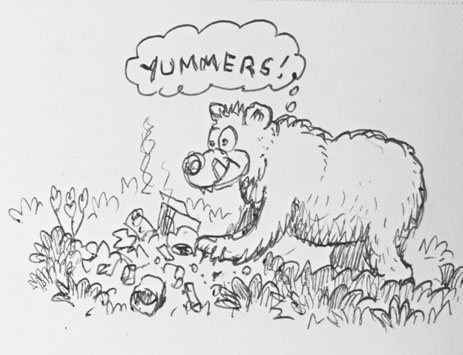
Trashey the Bear paid our home a visit yesterday evening. I was sitting on the couch reading and didn’t hear a thing. Neither did Dawn or Guy. While we were oblivious, Trashey was on our back patio, silently maneuvering one of our garbage cans from behind a lawn chair, without disturbing the lawn chair. He dragged it down a walkway and quietly tipped it over, removed the lid and carried off a big bag of garbage without spilling anything.
We looked out the window and saw the garbage can lying on its side, lid off. What the hell? We went outside to investigate. As we were standing next to the fallen garbage can trying to figure out what happened or who did it, Dawn looked up, pointed down the back alley and said, “I think I know who did it!” And so we saw Trashey on a nearby hillside, pulling stuff out of our garbage bag. Some shouting and hand clapping made him leave and I went over to pick up the garbage. But first I had to drive away two deer who rushed in and started eating the trash. I think the deer are colluding with Trashy.
Twelve years I’ve stored those garbage cans on the back patio with no problems. We even have game camera video of three bears walking past the garbage cans. No problems until Trashey the genius showed up. He’s getting somewhat famous in the community as being particularly bold and unafraid in his quest for an easy living.
I didn’t have a camera handy, so recorded Trashy with a Toonograph.
Update on 7/22/18: Recent news reports mention the capture and relocation of a trash-raiding brown-phase black bear. It is likely our very own Trashey. I wish him the best in his new life. Hopefully he won’t return.
Postscript, October 2, 2018- I learned that poor Trashey died during the deportation process, a victim of effects from the tranquilizers. Apparently this happens quit often but we never hear about it. It’s a sad fate for our forest brethren. Now there’s another bear hanging around town and getting into garbage. I worry about that as we have no other place to put our garbage cans other than on the back patio. So far, so good. The bear raided one of my neighbor’s cans and hauled a bag of trash into the woods.
I love spring! Snow melting, flowers pushing up, golden green tree leaves unfurling, early sunrises, late sunsets. The monochrome of winter has given way to a world of brilliant colors. The cold, sterile air has given way to cool air rich with the smells of life. Birds enrich the soundscape. Spring is a sigh of relief after winter.
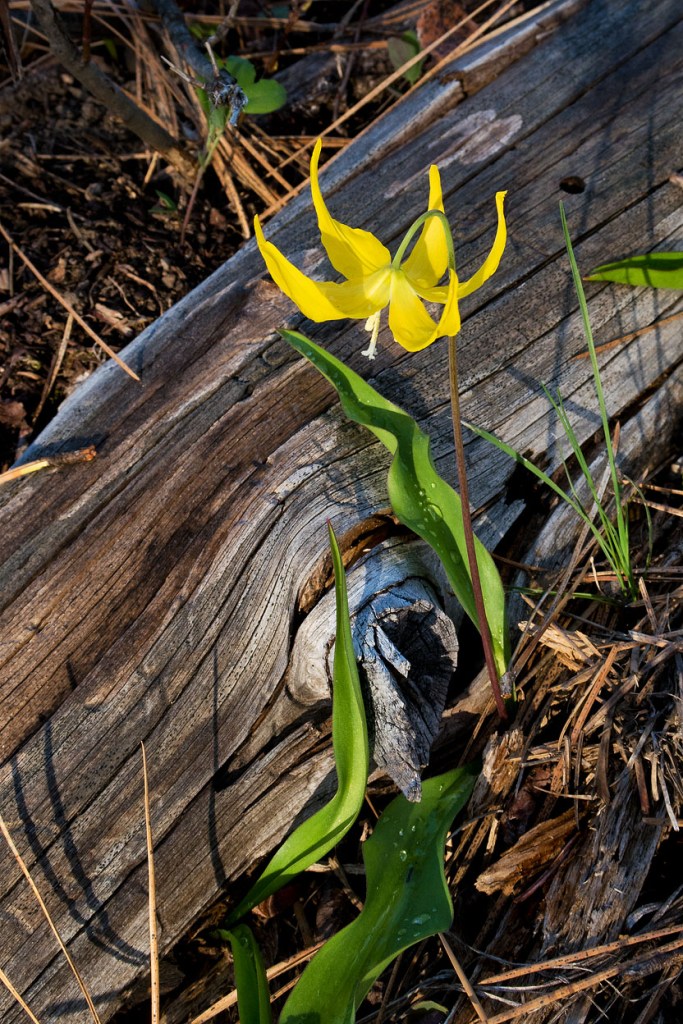
A graceful glacier lily, one of the first wild flowers to emerge.Spring beauties, the first woodland flowers of spring in the hills above home.Sunday sunrise, Roslyn WA, May 6, 2018.
It was my first winter backcountry excursion, and my first time on cross country skis. Yellowstone Park in late winter, carrying a heavy pack, is probably not the best venue for taking on new experiences like that. It took me a while to get used to the skis, which were old wooden Fischers (one had a broken tip capped with a plastic cover), but the groomed road was the best learning ground for that. Aside from almost sliding into some alarmed bison along the Madison River, it went well. The weather was excellent, with cold temperatures and mostly clear skies.
Skiing in from West Yellowstone with my friend Mike, we followed the groomed road up the Madison River to Madison Junction. That was our first night’s camp in the snow, made more agreeable by the heated bathrooms there. The second day we spent skiing leisurely up the Firehole River road toward the geyser basins and Old Faithful. Occasionally a Sno-Coach or pack of snowmobiles would trundle by. Since we were on the cusp of late winter and early spring, there was wildlife everywhere. Elk and Bison in meadows along the road, coyotes hunting mice, swans, deer, eagles, geese . . .I remember thinking at the time, “This is America as it used to be”.
That second day we made it to Nez Perce Creek, on the edge of the Lower Geyser Basin. It was there we decided to camp in a grove of lodgepole pines, right on the edge of a large open plain. The creek provided some warm, mildly sulfurous water and the trees provided refuge, we hoped, from the bison. We were concerned that foraging bison might accidentally trample us in the night. We could see the animals, dark shapes on the far side of the snowy plain, silhouetted against billowing plumes of steam.
We trampled down a spot with our skis and got the tent set up on it. As the sun set, the afternoon clouds dispersed and the temperature went down. And as the temperature went down, our appetites went up. We cooked up a big pot of stew and greedily ate it all. It’s amazing how many calories you use up just staying warm in the winter. Staying warm was a challenge at night and in the early mornings. The temperature fluctuates wildly that time of year, going from below zero F at night to above freezing during the day.
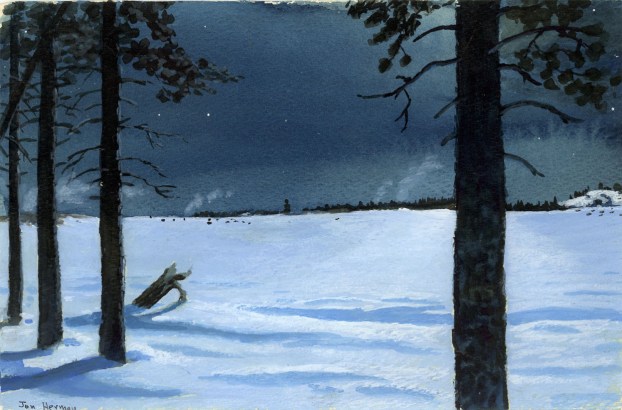
After dinner, I put on my skis and went to the edge of the trees. Other than the gurgling of the creek, it was quiet and still. The cold air had a crisp silence to it. A bright moon lit up the snowy landscape, including the steam plumes, which had grown considerably in the colder air. It also revealed the dark shapes of foraging bison. A few stars bright enough to shine in the moonlight were sharp and still in the night sky. Looking out at that scene, in that wonderful silence, I felt an indescribable peace. Everything was as it should be in that moment. Everything was in a state of pure reality, unsullied by thought or anxiety.
Unable to capture the scene with a camera, I did this watercolor soon after the trip.
I stood there as long as the cold would let me and then reluctantly returned to the tent. Mike was already in his goose down cocoon and I slithered into mine, along with a couple of water bottles, boots and other items I didn’t want to find frozen in the morning. The snow bed was comfortable and I drifted off to sleep. A few times I woke up during the night and listened, lucky to hear nearby bison breathing, snorting and crunching through the snow beyond our trees.
Mike and I woke up the next day to a sunny morning, un-trampled by our night visitors and ready to move on toward Old Faithful. I’ve never forgotten the absolute beauty, peace and serenity of that cold winter night.
I was looking at old family photos the other day. Pictures of my grandparents, great aunts and uncles, cousins show people at home, working, traveling, spending holidays together. One thing that struck me was how so many of my family had homes (some they built themselves), land, time and money to own a car and travel. None of them made a lot of money. Most of the families had a single wage earner with a modest job, but their work paid enough to own a home, some land, maybe a cabin in the woods. Most of them had a radio, later a TV, fine china, good clothes (again many of them made their own). These weren’t rich people, at least not monetarily, but they had enough and a little more. And they were able to do a lot to provide for themselves.
Family in 1934, on vacation in Colorado.
Times have sure changed. The middle class has been nudged more and more toward the poverty line. Or the poverty line has been nudged up into the middle class. Many families have to have two wage earners just to hang onto a home, if they can afford to buy where they live. Add to that clothing, food, medical care, transportation, communications for three or more people, not to mention pets. It gets expensive. And then there’s being able to afford an education at a college or university. It’s amazing how much it’s changed, and changed for the worse.
It’s snowing now and the maple leaves are fleeing the trees to flutter and roll in the cold wind before settling to the ground. They become rake-bait at that point, their service done, having made room on the trees for next year’s buds. The color show is nearly ended now, with only a few willows and cottonwoods holding onto their hoard of golden leaves. Soon enough those will fall and winter will be here.
It’s hard to believe that it was less than a week ago that I was napping in the warm sun on the shore of a mountain lake while my wife cast a fishing line into the mirror waters. Willows and alders still sported some gaudy leaves and the lake shore grass glowed with color. Squirrels chattered in the forest behind us and lazy ravens called out, floating on the breeze in a blue sky. It was absolutely wonderful. I’m so glad we made the time to visit the lake and enjoy one more sun-drenched day before winter started closing in.
Under a warm sun and a blue sky, Dawn casts for the elusive trout.
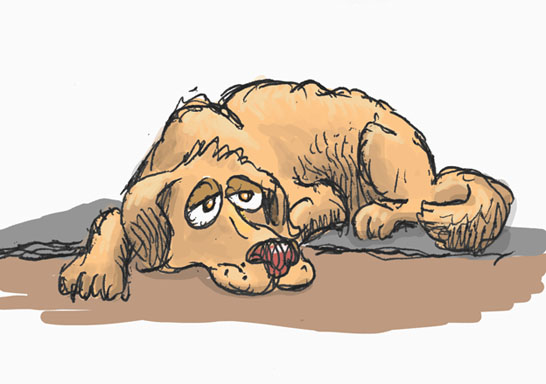
Poor doggy! This is our yellow lab, Guy. He’s coping with the heat by enduring it. I made this sketch from life yesterday. He looks pretty much the same today.
Sketch on paper with a Pentel RSVP ballpoint pen, scanned and colored in Photoshop. I love those Pentel pens! They’re great for sketching.
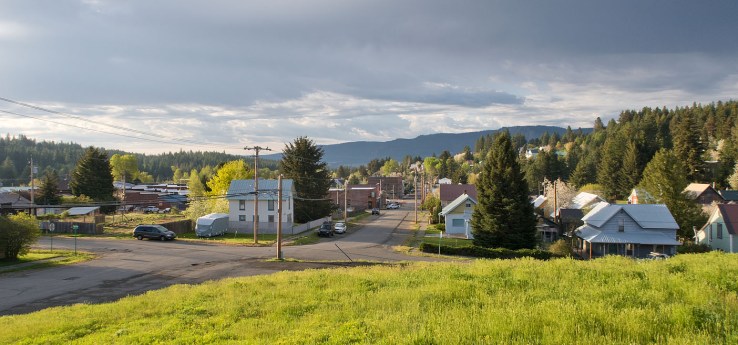
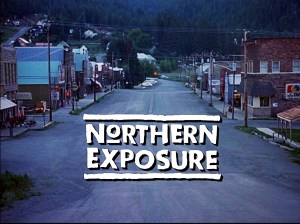
Roslyn, Washington. Pennsylvania Avenue, the main street.
Roslyn, Washington; the quaint little coal mining town that time remembered, thanks to the popular 1990’s TV show “Northern Exposure”. The show’s exterior scenes were shot in Roslyn, making it world famous and a travel destination for the show’s many fans. The film crew injected money and new life into the quiet community. And Northern Exposure was a great TV show. Something unique for a change, and in some ways it mirrored Roslyn, which is at least as quirky and interesting as Cicely, Alaska, the town it portrayed in the series. There’s a cast of real-life characters every bit as distinctive and interesting as those in the TV show. It is, in short, a fascinating old mountain village, and that will likely be its downfall.
A mere 80 miles to the east of Seattle on Interstate 90, Roslyn is too damn close to the Emerald City. Too close to the three-plus million people, many of whom are seeking to escape the effects of the tech boom that afflicts Seattle and Puget Sound. Boom times have a cost, and in this case that cost is quality of life, cost of living and the character of place. Big money is sweeping away the old Seattle and that sweep is creating a ripple effect that pushes outward, including to the east. So, it’s natural that people who seek to escape the horrendous traffic, crowds, high cost of living, hustle and bustle of a boom town will come here. It is, or was, just far enough away from Seattle to be a serene oasis. Quieter, dryer, less crowded. Who wouldn’t want to come here, at least to visit? Especially since it’s so close.
Modest mega-home at Suncadia destination resort.
As living conditions become more stressful and unpleasant on the west side of the mountains, more and more people are moving east to Roslyn. Many of those people have considerable wealth and buy large mega-homes in and around the 7,000-acre Suncadia destination resort, which is adjacent to Roslyn. Did I mention Suncadia yet? It too has had a ripple effect on the community, the most notable of which is the rising cost of homes and rent in Roslyn.
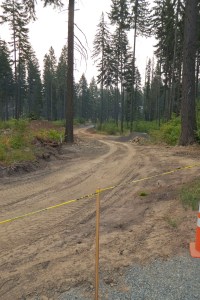
New road winds through forest.
The things that made Roslyn, Roslyn, are rapidly disappearing. Affordability, slow pace of life, light traffic, peace and quiet, chatting with neighbors at The Brick, ramshackle old trucks and cars parked along Pennsylvania Avenue, dogs in the taverns.
Cost of living has increased dramatically over the last decade. Formerly affordable old miners’ homes in Roslyn are expensive. Recently up for sale is a 2-bedroom, half-bath, 806 square foot home on a 7,000 square foot lot. It’s located along the busy highway into town and badly in need of extensive work (exterior and interior paint, trim, wallpaper, windows, yard, kitchen cabinets). The place looks like shit. It’s advertised for $150,000. And that’s the low end of the housing spectrum. Many homes are in the $300k range and rising. That probably looks good to someone moving here from Seattle, but the locals who live and work here can no longer afford to buy, and are paying more in rent.
These days, on the weekends, you’ll likely see a mix of giant glossy pickups, luxury cars and large motorcycles parked along Pennsylvania Avenue near The Brick Tavern (oldest continuously operating tavern in the state!). Maserati, Land Rover, Porsche, BMW, Lexus, Audi, Mercedes and Lamborghini along with expensive Harley Davidson motorcycles. The Brick is usually packed and the locals rarely go there anymore. Crowds flock and saunter on the downtown sidewalks. People take photos of each other in front of the famous Roslyn/Cicely camel painted on the sandstone wall of The Roslyn Cafe.
But I digress. What I want to point out to people who are thinking of moving here is this: if you think you’re escaping the rat race and moving to a place with a slow pace of life as well as peace and quiet, think again. The very traits that make this area a magnet for people are disappearing.
On any given summer morning, the weapons of mass construction rumble through Roslyn and surrounding roads and streets. Dump trucks, cement trucks, logging trucks, gravel trucks, trucks hauling flatbed trailers stacked with house trusses or drywall, trucks hauling water, trucks transporting backhoes and excavators, massive pickup trucks hauling contractors (often with malfunctioning mufflers) and trailers. The noisy procession is heaviest in early morning and later in the evening. And it is very noisy. Add to that the occasional sound of chainsaws, back-up alarms, and nail guns.
On weekends, the noise comes from an amazing variety of muffler-challenged vehicles, from old pickups, to new pickups, to hordes of Harley Davidson motorcycles. The latter sound like P-51 Mustangs swooping over the town in strafing runs. It’s quite the cacophony of noise and activity. For those of us who live here for the peace and quiet, it’s very disquieting. So if you decide to move here, and I don’t blame you if you do, consider yourself forewarned. That which you might be seeking is in a state of dynamic flux, and fading fast.
It’s that time of year again. The snow has faded into the ground, the grass is green and growing and the weather is more kindly. It must be time for yard work! Yard work can be a healthy, enjoyable endeavor, but I’m afraid my attitude isn’t that positive. For me, it’s mostly a pain in the ass.
I don’t care much about maintaining a good-looking yard these days. My wife and I barely keep it looking decent. Maybe that’s partly due to our house having what some would regard as an ugly, scruffy yard. I went for 20 years without a yard and got used to not having to do yard work. Now, after living with a yard for the last 10 years, I’m still having trouble adapting to the yard work aspect. I will admit that it’s good to have a yard; a place to sit outside and read, or to have picnics and barbecues at. A place for our dog to sit in the sun. A place to relax outdoors.
Still, I find myself feeling resentful that I have to spend time working in it. Maybe that’s due in part to the fact that my summer job involves working in the woods, doing similar work, but on an intimidating scale. Cutting and moving logs off of miles of trails, cleaning debris off trail bridges, cutting and disposing of brush. It’s like working in God’s yard. After all that, who wants to come home and mow the lawn? In some ways, maybe it’s a bit of a letdown after working in God’s yard.
I was raking pine needles in the back yard the other day; the needles being the unrelenting product of four towering, grand old ponderosa pines. I kept wondering “what’s the point?” Not only “what’s the point” in raking needles, but what’s the point of all the enormous time and money people spend on their yards?
Particularly in light of how much people claim they love nature. They’ll work their asses off in the yard and then when that’s done, they take a break by going to the woods, where the very same natural processes they’ve been fighting have total control. People love the woods, but they work hard at home to make sure their yards don’t look like the woods. I don’t understand, and I resent this dichotomous approach to nature. I’d like my yard to look like the woods, which would mean less work and expense for me and my wife. We could still have a little patch of green lawn, surrounded by native plants and pine needles. It might irritate the neighbors, but it would be a win-win situation for me and for nature.
After re-reading the previous paragraph, my brain said, “But what about the threat of wildfire?” Well, my brain has a point. We live at the edge of the forest, so maybe I’ll keep raking those needles and leaves and try to keep the grass somewhat green after all. Just in case.
I recently watched a video of North Korean troops marching in a parade. After witnessing that, I doubt we’ll have to worry about the North Korean foot soldier in a war. The entire army will be 4F in no time with fallen arches!
What’s the deal with goosestepping anyway? Do geese do it? If so, it doesn’t matter because geese have an alternative; they can fly! People can’t; at least not on their own.
I’m not impressed by goosestepping. It looks painful as hell and totally useless. Totalitarians love it though. I guess if you’re a totalitarian, you have to do it. It must be in the rule book “Total Totalitarian Rules!” It’s a dictator thing. Maybe they’re selling arch supports or insoles and getting rich along with their arch supporters. Who knows?
All I know is that goosestepping is stupid and harmful and looks ridiculous. Kind of like dictators themselves.
Like many of the small towns in the Columbia Basin, Sprague seems like a ghost town, dormant under the vast blue sky. It was a sunny but cold March morning when I stopped by. A train roared through town just as I pulled up and parked along the street. After the long line of rattling, squeaking cars passed, the train’s rumble diminished until only the soft hiss of traffic on nearby I-90 could be heard. An cold east wind flipped a loose piece of corrugated roofing up and down, making it bang like someone was hard at work, hammering, building something.
That was an ironic illusion. Nobody was building anything in Sprague. It didn’t even seem like anyone was there. The main street was deserted, most of the buildings dirty, dilapidated; windows covered with plywood. There were still a couple of places with “OPEN” signs on them. One was Kathy’s Family Foods, housed in a bulky old white brick and stone building. Just past that was a low, red brick building with a sign hanging over the sidewalk that said “The Sprague Tavern”. While I was looking that way, a hooded, hunched figure came out of the tavern and walked off down the street. That was the sole pedestrian I saw while I was in town.
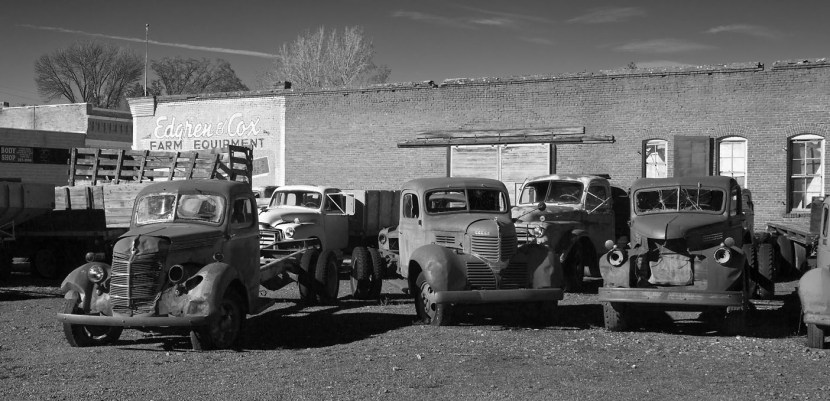
Closer to hand, next to where I parked, was an open dirt lot filled with the rusted and ravaged hulks of old trucks. A sign on one proclaimed “WELCOME, Dave’s Old Truck Rescue, Come on in, Look, Take Pictures, But Don’t…”. The last part was hidden but I imagine it said something like …”Damage”. They didn’t look very rescued to me; it was more like a truck graveyard. I imagine to a collector and restorer, it looks like nirvana. Those old trucks could be quite a source of original parts. Some looked like they weren’t quite beyond restoration.
I walked around and looked at the vehicles, took photos and wondered who had owned the trucks, how they were used, what their history was. At some point long ago, each truck was bought new and shiny, the pride of its new owner. Marveled over by friends and family as the latest in transportation technology. Driven with enjoyment and pride for a while. Washed and waxed, oil changed regularly, valued. Valued until they aged and became dented, broke down too often and eventually cost more to repair than they were worth.
That was probably the story of the entire town. Old, rusted, broken down, not quite forgotten but left to decay just outside of the modern world that rushed by on Interstate 90. Despite that, neither truck nor town was beyond restoration. Not an impossible task, but it would take a lot of energy, drive, skill and smarts to bring them back from the undead.
I walked around the block and found another old brick building with a cigar ad painted on a wall facing a small grassy plot. There was also an advertisement for Barbershop and Baths. The building itself looked like it had been a garage long ago. Just around the corner from that I looked up and spotted a towering spire across the tracks, so I walked up a small hill to see the local Catholic Church. I wonder how big the congregation is these days and whether the Church even staffs it anymore. Wikipedia calls it the Mary Queen of Heaven Church. It’s a beautiful building and probably worth a look inside. There’s a historic cemetery there, which I didn’t see. I felt pressed for time and took a few photos before returning to the lot and my car parked along the street. A utility pickup drove by and a car passed through town, so there was some life there after all.
It was time to leave. I still wanted to explore and was curious about what in the hell happened to this town, and to other towns like it. I got back into the car and drove off, heading west, out of town and into the windy, channeled scablands along Sprague Lake. I might return someday to look around more. For a town that seems so distant and isolated, Sprague is easy to get to.





 making it world famous and a travel destination for the show’s many fans. The film crew injected money and new life into the quiet community. And Northern Exposure was a great TV show. Something unique for a change, and in some ways it mirrored Roslyn, which is at least as quirky and interesting as Cicely, Alaska, the town it portrayed in the series. There’s a cast of real-life characters every bit as distinctive and interesting as those in the TV show. It is, in short, a fascinating old mountain village, and that will likely be its downfall.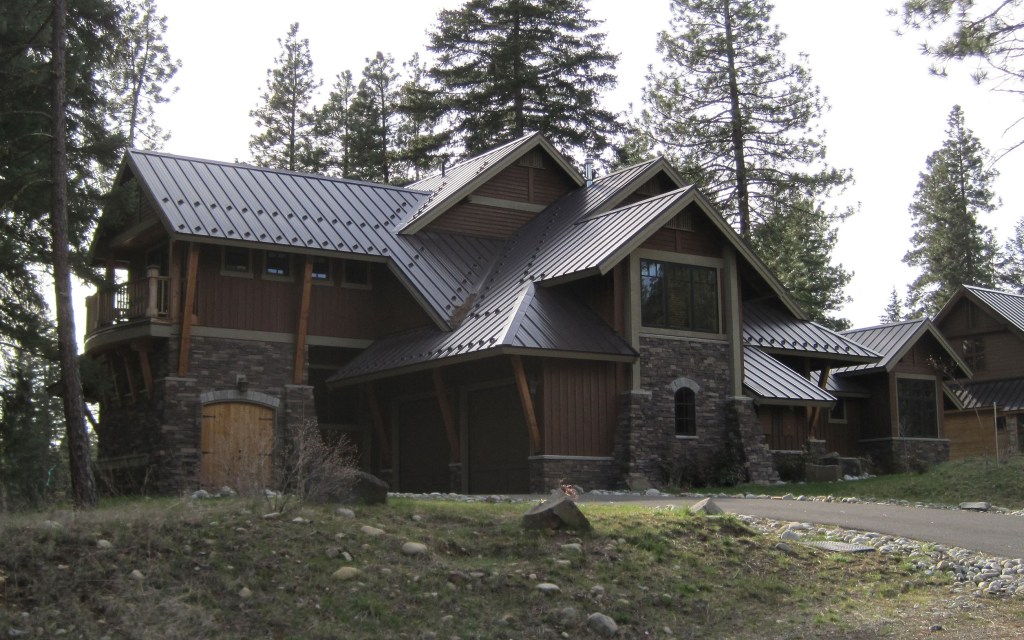
 you think you’re escaping the rat race and moving to a place with a slow pace of life as well as peace and quiet, think again. The very traits that make this area a magnet for people are disappearing.
 hauling contractors (often with malfunctioning mufflers) and trailers. The noisy procession is heaviest in early morning and later in the evening. And it is very noisy. Add to that the occasional sound of chainsaws, back-up alarms, and nail guns.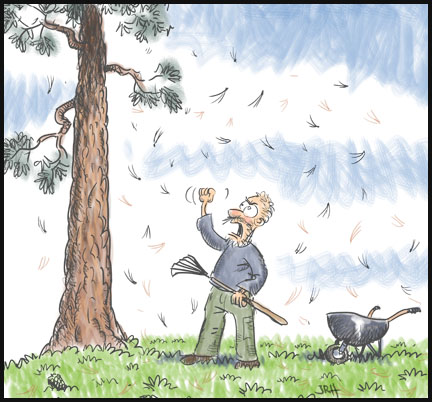



 J.R. Herman